
Additional visits
Temporary increased calls for personal care, continence, meals, medication and wellbeing checks.
Crisis response and hospital avoidance in St Helens
Short-notice social care that can help stabilise a situation at home, support discharge and rebuild confidence safely.
TogetherCare is not an emergency or NHS clinical Urgent Community Response service. We provide assessed social care alongside appropriate health professionals.
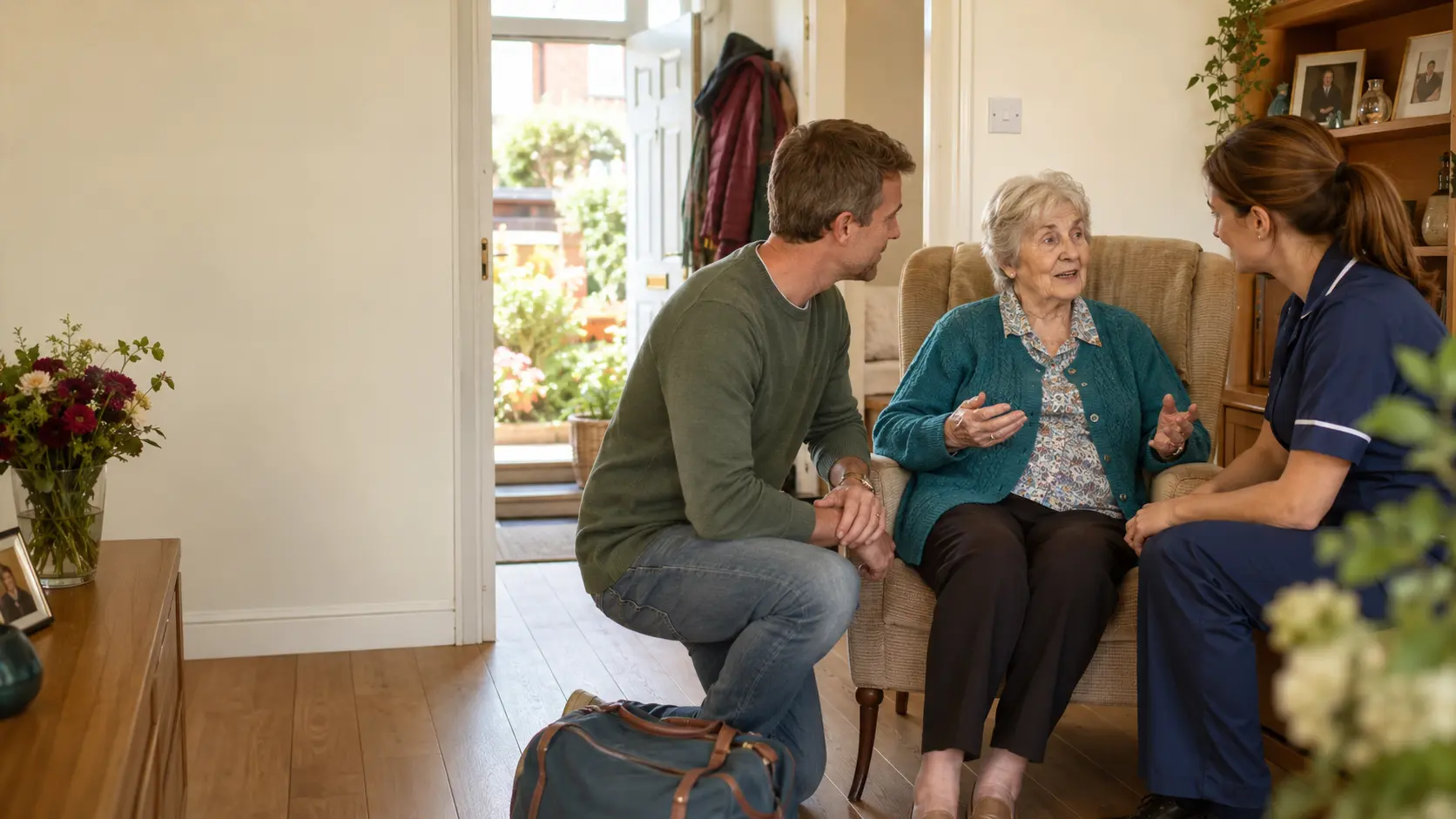
What is crisis response care?
A crisis does not always mean an immediate medical emergency. A fall, reduced mobility, carer exhaustion, confusion, discharge or breakdown of an existing package may create a growing risk of admission, neglect or placement breakdown.
We establish what has changed, the current risks, the support required and whether TogetherCare has the skills and staffing to respond safely.
Rapid but responsible assessment
A safe decision depends on understanding both the immediate problem and what must happen if the person deteriorates.
Hospital avoidance support
Hospital admission should never be delayed when medical treatment is required. In suitable circumstances, practical support may help someone remain safely at home.
Temporary increased calls for personal care, continence, meals, medication and wellbeing checks.
Assistance with transfers and safe movement following current professional guidance and available equipment.
Meal preparation, drinks, hydration prompts and records where intake is a concern.
Prompts, assistance or administration following assessment, with omissions and concerns escalated.
Short-term support giving an exhausted or unexpectedly unavailable family carer essential time and reassurance.
Accurate records of presentation, falls, intake, medication, mobility and agreed professional contact.
NHS Urgent Community Response
NHS UCR teams provide rapid multidisciplinary clinical assessment and treatment in people’s homes. TogetherCare does not present its social-care service as that NHS clinical pathway or promise the national two-hour clinical response standard.
We may work alongside UCR, GPs, district nurses and other professionals by providing agreed personal care, practical support, observation and continuity after clinical assessment.
NHS England information about UCR services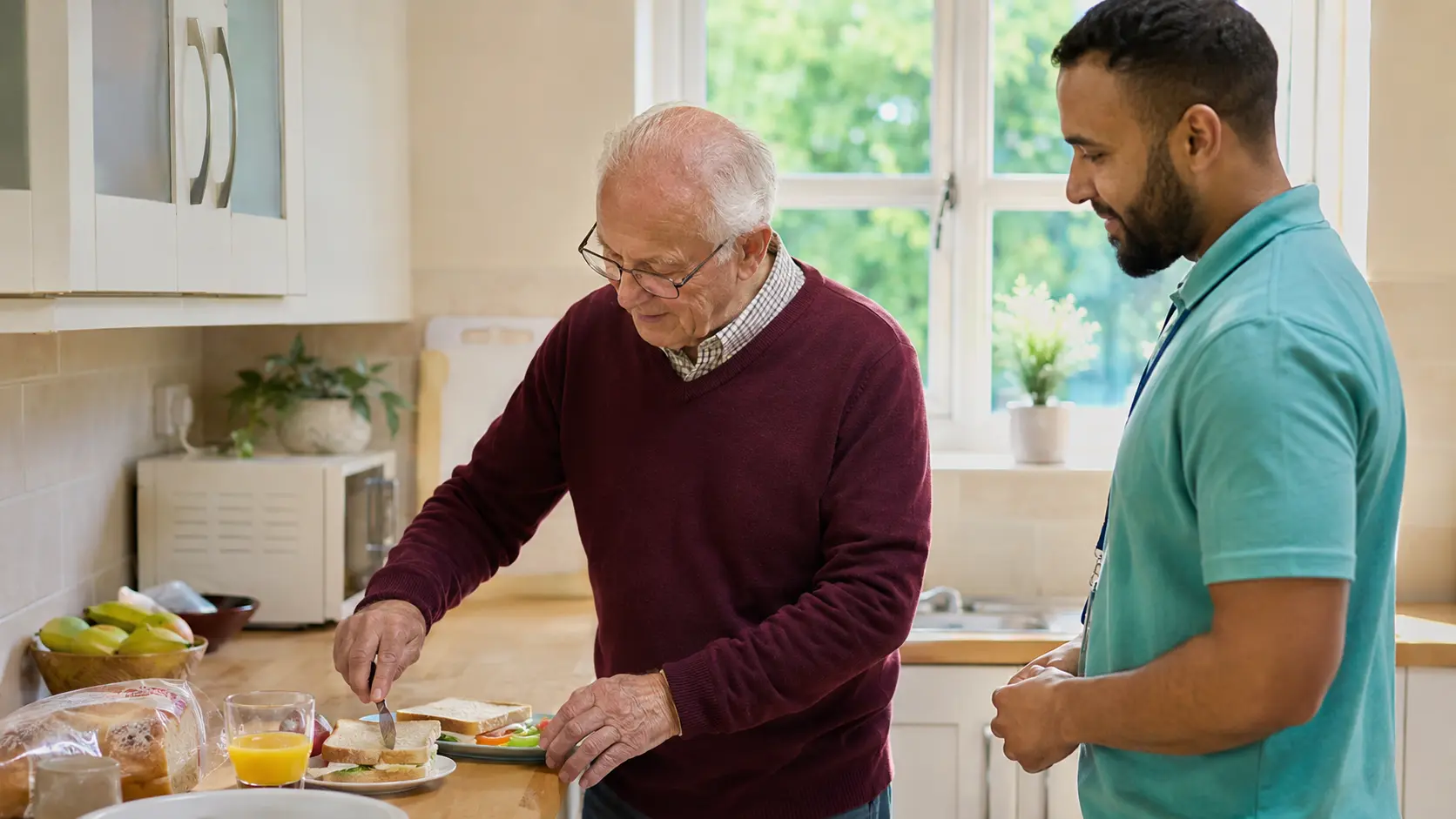
Reablement-focused support
Following illness, injury or admission, it can be tempting to complete every task. Reablement instead helps someone practise and regain everyday ability through personally meaningful goals.
Risks that need clear planning
Staff follow current transfer and equipment guidance, record falls or near misses and seek clinical review where indicated.
New or altered treatment must be authorised and reflected in a clear plan. Staff do not independently change doses.
New breathing difficulty, chest pain, reduced responsiveness, sudden weakness or other urgent changes require appropriate NHS escalation.
Reduced intake, swallowing concerns, vomiting or dehydration signs are recorded and reported through the agreed route.
Emergency respite may help, but staffing, access, medication, equipment and overnight needs still require safe planning.
Neglect, unsafe care, exploitation, unexplained injury or significant self-neglect is escalated under safeguarding procedures.
Supporting safe hospital discharge
Discharge is safer when the support, equipment, medicines and communication routes are understood before the person arrives home.
We will not confirm a start merely to meet a discharge target if essential equipment, guidance, staffing or medicines arrangements remain unresolved.
Short-term stabilisation
A crisis package should not simply continue unchanged. Once the immediate situation is steadier, the individual and relevant professionals can decide whether support should reduce, end, continue or move into a longer-term arrangement.
Working with referrers and families
With consent and agreed information sharing, we can work with discharge teams, UCR, GPs, community nurses, therapists, social workers, CHC and equipment services.
Relatives may be exhausted or frightened by sudden change. We explain TogetherCare’s role honestly, provide dependable practical support and protect the individual’s own voice and choices.
No provider can guarantee instant or unlimited staffing. We will confirm what is safely achievable.
Why TogetherCare?
Frequently asked questions
Call us early so we can understand what has changed and whether TogetherCare may be able to help.
Short-notice or increased social-care support when an existing arrangement is no longer sufficient to keep someone safe at home.
No. Call 999 for immediate or life-threatening emergencies and use the appropriate NHS route for urgent clinical assessment.
No. NHS UCR provides rapid multidisciplinary clinical assessment and treatment. TogetherCare can provide assessed social care alongside or after NHS involvement.
It depends on assessment, staffing, equipment, medication, access, funding and required skills. We respond promptly but do not promise a start before these are understood.
Potentially, where the main gap is suitable social care and medical admission is not required. Clinical decisions remain with health professionals.
Yes, where a safe home arrangement can be established with the required information, equipment, medicines and staffing.
Short-term, goal-focused support that helps someone regain skills and confidence after illness, injury or hospital admission.
Waking nights, sleep-ins or night sits can be considered following assessment and subject to suitable staffing.
St Helens is our main area. Suitable referrals in Widnes, Knowsley and Wigan can also be considered.
Discuss an urgent referral
Share the location, current risks, required hours, medication, mobility, professional contacts, funding route and intended start date.
Illustration created for TogetherCare and may not always show actual staff and service users.
Published CQC assessment 2026
“People with highly complex needs received exceptionally personalised care from staff and leaders.”CQC assessment, 2026
“I think the care overall is fantastic. I cannot fault them.”Person receiving support, feedback recorded by CQC
“Partnership working was a clear strength of the service.”CQC assessment, 2026. Professionals described TogetherCare as a “trusted provider”.