

TogetherCare provides personalised support for people with learning disabilities across St Helens, helping each individual live a meaningful life in a way that reflects their choices, abilities, relationships and ambitions.
We understand that every person is different. Some people may need occasional support with particular activities, while others require regular daily assistance, overnight care or a more structured package of support.
Our role is not to take over someone’s life. It is to provide the right level of help so that they can make decisions, develop skills, maintain relationships and take part in their local community.
Support is built around the individual rather than expecting the person to fit into a standard model of care.
What is learning disability support?
Learning disability support helps people manage areas of everyday life where they may need additional assistance, guidance or reassurance.
This may include:
- Personal care
- Preparing meals
- Taking medication
- Managing a home or tenancy
- Attending health appointments
- Developing communication skills
- Building confidence
- Accessing education or employment
- Using public transport
- Managing money safely
- Forming and maintaining relationships
- Taking part in community activities
- Understanding choices and risks
- Maintaining emotional and physical wellbeing
A learning disability may affect how someone understands new or complex information, learns new skills or manages everyday tasks.
It does not define the person or determine what they can achieve.
With the right support, people can build skills, develop confidence and exercise greater choice and control over their lives.
Understanding the individual
Before support begins, we take time to understand the person’s strengths, communication, routines and goals.
Our assessment may consider:
- How the person communicates
- Their preferred routines
- What is important to them
- Personal interests and hobbies
- Family and significant relationships
- Cultural or religious preferences
- Personal care needs
- Medication and health conditions
- Mobility and physical support
- Nutrition and hydration
- Sensory preferences
- Emotional wellbeing
- Known sources of anxiety or distress
- Decision-making and mental capacity
- Community activities
- Education, employment or volunteering
- Relationships and social connections
- Safety and identified risks
- Existing professional recommendations
- The outcomes the person wants to achieve
We do not assume that a person wants the same things as someone else with a similar diagnosis.
One person may want help building confidence on public transport, while another may want to prepare meals independently, find voluntary work or develop new friendships.
The care plan should reflect the person’s own priorities.
Supporting adults and young people approaching adulthood
TogetherCare can consider support for adults and young people preparing to move into adult services.
The transition into adulthood can involve significant change, including leaving education, moving home, accessing new health services or taking on greater responsibility.
We can work with the individual, family and professionals to help make this transition more structured and less overwhelming.
Support may include:
- Building daily living skills
- Understanding adult care arrangements
- Developing confidence outside the family home
- Preparing for a tenancy or supported living
- Learning to travel more independently
- Attending college, training or work
- Managing appointments
- Developing routines around medication and health
- Increasing participation in decisions
- Building safe social relationships
- Understanding personal boundaries
- Preparing gradually for changes in support
Transition planning should begin early enough for the person to understand what is changing and have a meaningful voice in the process.
Choice, communication and control
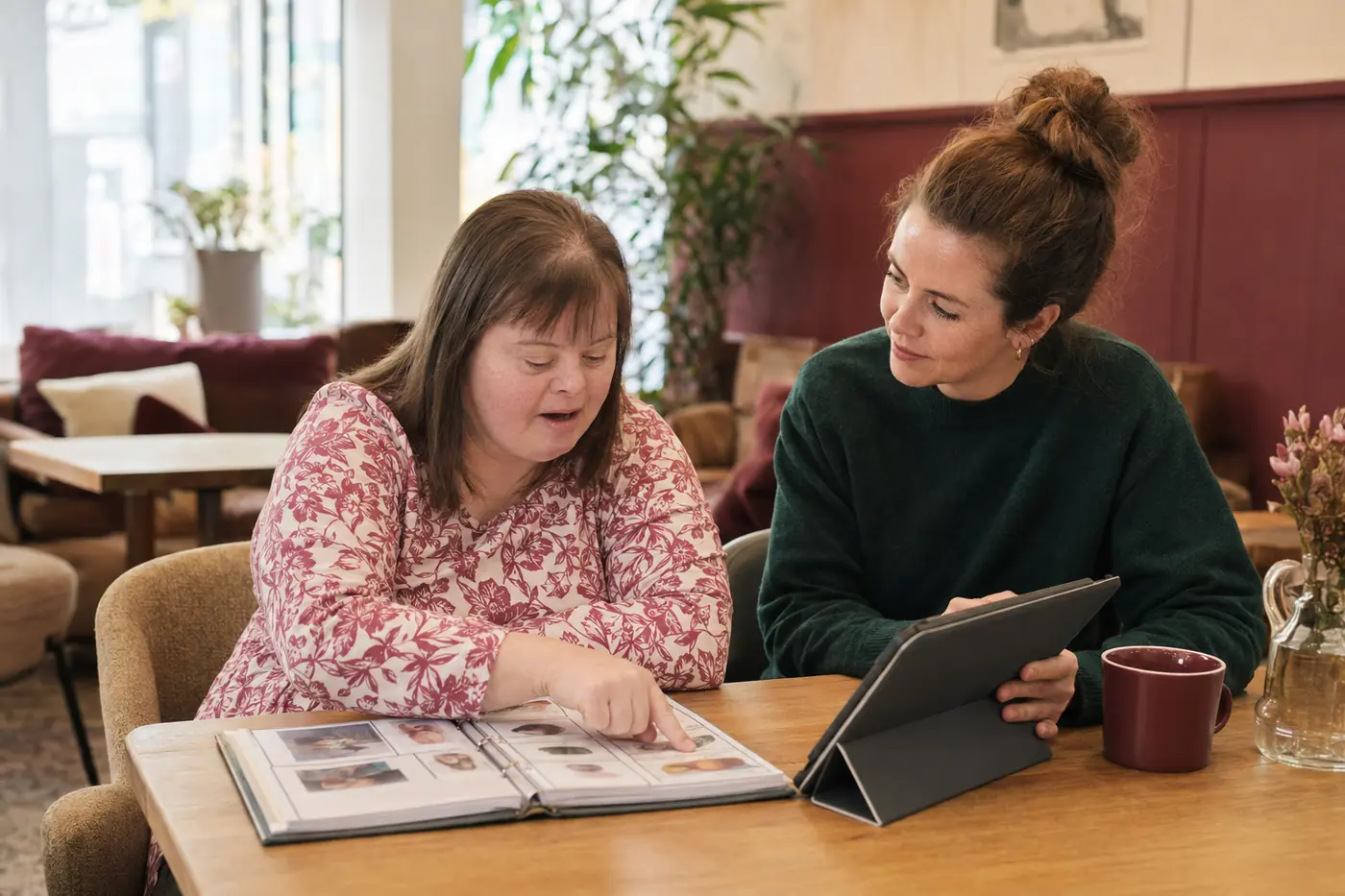
People communicate in many different ways.
Some individuals use speech, while others may use:
- Makaton
- British Sign Language
- Pictures or symbols
- Communication books
- Objects of reference
- Electronic communication aids
- Facial expressions
- Gestures
- Behaviour
- Eye movements
- A combination of approaches
Our staff adapt their communication to the individual.
This may include:
- Using clear and simple language
- Giving one piece of information at a time
- Allowing additional time for a response
- Using visual prompts
- Offering meaningful choices
- Avoiding complex or abstract wording
- Checking understanding respectfully
- Learning the person’s individual signs and expressions
- Recognising changes in behaviour as possible communication
- Following advice from speech and language professionals
Communication should never be reduced to asking closed questions and accepting the quickest response.
Staff take time to understand what the person is expressing and whether they have been given enough information to make a genuine choice.
Accessible information
People should receive information in a form they can understand.
Depending on the individual, this may include:
- Easy-read documents
- Pictures and photographs
- Short written sentences
- Visual timetables
- Social stories
- Step-by-step guides
- Videos
- Demonstration and practice
- Repetition over time
- Support from a trusted person or advocate
Accessible information can help people understand:
- Their care plan
- Medication
- Appointments
- Changes in staff or routines
- Their rights
- How to raise a concern
- Personal safety
- Tenancy responsibilities
- Health information
- Available choices
Information should be meaningful rather than simplified so much that important details are removed.
Building independence through everyday skills
Our support focuses on what the person can do and how their existing abilities can be developed.
Daily living goals may include:
- Washing and dressing
- Choosing suitable clothing
- Preparing breakfast
- Cooking simple meals
- Making drinks safely
- Using household appliances
- Shopping
- Cleaning and laundry
- Managing personal belongings
- Understanding money
- Paying for items
- Planning activities
- Making appointments
- Using a telephone
- Travelling locally
- Maintaining a safe home
- Answering the door safely
- Managing a weekly routine
Staff work alongside the person instead of completing every task for them.
A task may be broken into smaller steps, with prompts gradually reduced as confidence grows.
Progress should be encouraged without placing pressure on the person or setting unrealistic expectations.
Personal care with dignity
Some people with learning disabilities require support with washing, dressing, continence, grooming or other personal routines.
Personal care is provided with privacy, dignity and respect.
We consider:
- The person’s preferred routine
- Their communication and understanding
- Sensory needs
- Gender preferences where possible
- Cultural and religious requirements
- The level of prompting or physical assistance required
- How consent is expressed
- What may cause anxiety
- How independence can be encouraged
- Any health or mobility considerations
Staff explain what they are doing and allow the person to participate as much as possible.
Personal care should not be rushed simply because the person needs additional time to understand or respond.
Medication and health support
People with learning disabilities may experience barriers to accessing and understanding healthcare.
Some individuals also live with epilepsy, diabetes, mobility needs, sensory impairments, mental health conditions or other long-term health needs.
TogetherCare may support with:
- Medication prompts
- Medication assistance or administration
- Digital medication records
- Attending GP, dental and hospital appointments
- Preparing information for appointments
- Supporting the person to explain symptoms
- Following agreed health action plans
- Nutrition and hydration
- Monitoring changes in wellbeing
- Supporting routine health checks
- Following epilepsy or emergency protocols
- Reporting concerns promptly
- Communicating with health professionals where agreed
A change in behaviour should not automatically be considered part of the person’s learning disability.
It may indicate pain, infection, constipation, medication effects, emotional distress or another health concern.
Staff are expected to know the person’s usual presentation and report significant changes.
Annual health checks and appointments
Adults with learning disabilities may be eligible for an annual health check through their GP practice.
Where this forms part of the care plan, we can support the person to:
- Understand what the appointment is for
- Prepare questions
- Attend the appointment
- Bring relevant health information
- Communicate symptoms or concerns
- Understand agreed next steps
- Arrange follow-up appointments
- Collect prescriptions
- Follow practical health advice
The person should be spoken to directly during appointments wherever possible, even when a care worker or family member is present.
Our staff support communication but do not speak over the person or make clinical decisions on their behalf.
Community inclusion
Being part of the community is about more than leaving the house.
It involves having opportunities to build relationships, use local services and take part in activities that are personally meaningful.
Community support may include:
- Going shopping
- Visiting a café
- Attending a library
- Joining a club or group
- Taking part in sport or exercise
- Visiting friends or relatives
- Attending college
- Volunteering
- Going to work
- Attending faith or cultural activities
- Using local leisure services
- Going to events
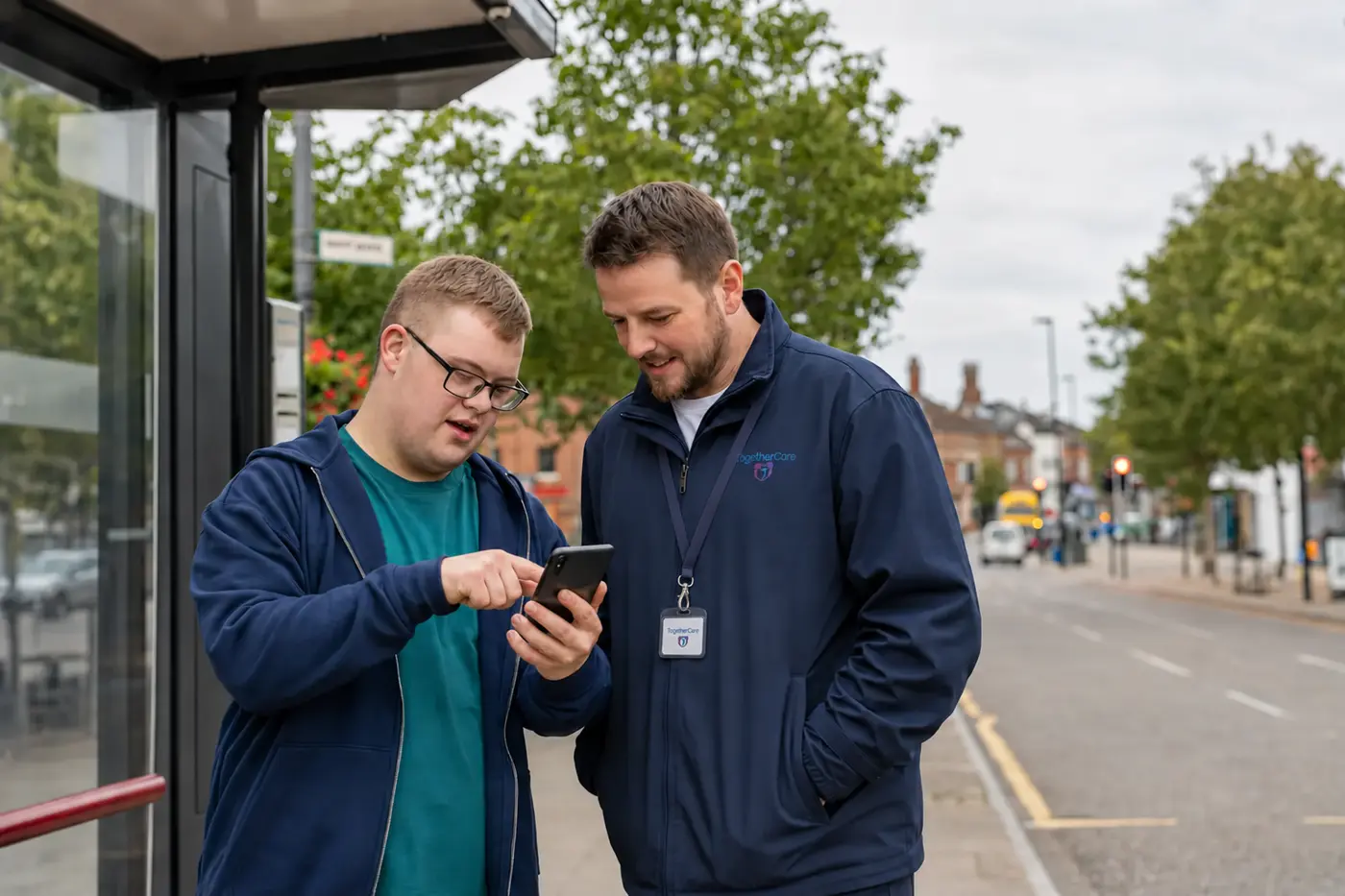
- Learning travel routes
- Developing confidence in public places
Activities are chosen with the person, not simply selected because they are available.
We also avoid creating a routine where the individual only attends services designed for people with disabilities unless that is genuinely their preference.
Our aim is to support access to ordinary community opportunities alongside specialist services where these are beneficial.
Education, employment and volunteering
Work, learning and volunteering can provide structure, confidence, social contact and a sense of purpose.
TogetherCare can support individuals to:
- Attend college or training
- Prepare for an interview
- Travel to work
- Follow a daily timetable
- Develop workplace routines
- Communicate with support staff
- Organise clothing and equipment
- Attend voluntary placements
- Build confidence gradually
- Maintain a healthy balance between activity and rest
We do not promise employment outcomes, but we can help the person overcome practical barriers and work towards agreed goals.
Where specialist employment support is involved, we work alongside that service rather than duplicate its role.
Relationships, friendships and social life
People with learning disabilities have the same right to friendships, relationships, privacy and family life as anyone else.
Support may include:
- Maintaining contact with friends and relatives
- Attending social activities
- Understanding healthy relationships
- Recognising personal boundaries
- Using social media more safely
- Planning visits
- Developing confidence in social situations
- Understanding consent
- Accessing appropriate relationship advice
- Reducing isolation
Staff must respect the person’s privacy and avoid unnecessary involvement in personal relationships.
Where there are concerns about exploitation, coercion or abuse, these are addressed through safeguarding procedures rather than automatically restricting all contact.
Mental capacity and supported decision-making
A learning disability does not automatically mean a person lacks capacity.
Capacity relates to a particular decision at a particular time.
We support people to make their own decisions by:
- Giving information in an accessible format
- Allowing enough time
- Choosing the best time and environment
- Using pictures or demonstrations
- Breaking the decision into smaller parts
- Involving a trusted person where the individual agrees
- Checking whether the person can understand, retain, use and communicate the information
- Avoiding pressure or leading questions
A person should not be considered unable to decide simply because they choose something others would not choose.
Where the person lacks capacity for a specific decision, any action taken on their behalf must be in their best interests and use the least restrictive available option.
Best-interest decisions should involve the relevant people while keeping the person’s wishes, feelings, beliefs and previous choices central.
Positive risk-taking
Living an independent life involves some level of risk.
Good support should help people understand and manage risks, rather than removing every opportunity.
Positive risk-taking may involve:
- Learning a new travel route
- Preparing food
- Using public transport
- Attending an activity without family
- Managing part of a weekly budget
- Forming new relationships
- Spending time at home alone
- Trying a new work or volunteering opportunity
- Making personal lifestyle choices
We consider:
- What the person wants to achieve
- Their understanding of the risk
- What support could reduce the likelihood of harm
- Whether technology or equipment could help
- Whether the activity can be introduced gradually
- The least restrictive approach
- How the decision will be reviewed
Restrictions should not be introduced simply because they are convenient for staff or remove all uncertainty.
Support when someone experiences distress
Some people may communicate distress through behaviour, particularly where speech or understanding is limited.
This might include:
- Withdrawal
- Shouting
- Repetition
- Self-injury
- Refusing support
- Leaving an environment
- Throwing objects
- Increased movement
- Changes in eating or sleeping
- Physical aggression
- Repeated questioning
We do not reduce the person to a behaviour label.
Staff consider what the individual may be communicating and what has changed.
Possible contributing factors may include:
- Pain or illness
- Sensory overload
- Unexpected change
- Communication difficulties
- Hunger or thirst
- Tiredness
- Fear
- Lack of choice
- Unfamiliar staff
- Trauma
- Boredom
- Medication
- Loss of an important relationship
- An unsuitable environment
The aim is to understand the cause, reduce avoidable distress and provide consistent support.
Positive Behaviour Support principles
Where a person has a Positive Behaviour Support plan or specialist behavioural guidance, staff follow the agreed approach.
This may involve:
- Understanding the function of behaviour
- Identifying early signs of distress
- Reducing environmental triggers
- Supporting communication
- Providing predictable routines
- Increasing meaningful activity
- Developing coping strategies
- Using proactive rather than reactive support
- Applying consistent de-escalation approaches
- Recording incidents factually
- Reviewing patterns over time
TogetherCare staff do not independently create specialist behavioural programmes unless they hold the relevant professional competence and authority.
We work with behaviour specialists, psychologists, social workers, families and other professionals where additional expertise is required.
Autism and learning disability
Some people with learning disabilities are also autistic, but autism and learning disability are not the same.
Where both are present, care planning should reflect the person’s combined needs, including:
- Communication
- Sensory processing
- Need for predictability
- Focused interests
- Anxiety
- Social understanding
- Executive functioning
- Emotional regulation
- Physical and mental health
- Daily living support
TogetherCare also provides a separate Autism and Neurodiverse Support service for people who may not have a learning disability.
This distinction helps ensure people receive support based on their individual presentation rather than a general label.
Supporting people with complex health needs
Some individuals require learning disability support alongside complex physical or clinical care.
Depending on assessment, professional guidance and staff competency, support may include:
- Epilepsy and seizure management
- Rescue medication
- Enteral feeding
- Catheter support
- Respiratory interventions
- Mobility and hoisting
- Pressure care
- Diabetes support
- Specialist medication
- Continence care
- Recognition of deterioration
- Overnight monitoring
Specialist interventions are provided only when they fall within TogetherCare’s regulated scope and the staff involved have completed the required training and competency assessment.
The clinical task should never overshadow the person’s wider life, relationships and personal goals.
Home care and supported living
Learning disability support may be provided:
- In the family home
- In the person’s own home
- Within a shared tenancy
- As part of supported living
- During community activities
- Through planned respite
- As part of a transition arrangement
In supported living, the person’s home and care should remain separate arrangements wherever required.
The individual should have rights and responsibilities connected with their tenancy and should not be treated as though they are living in a care home.
Support may include:
- Managing household routines
- Paying bills with appropriate assistance
- Shopping and meal planning
- Cleaning and laundry
- Understanding tenancy responsibilities
- Building relationships with neighbours
- Keeping the property safe
- Making choices about décor and belongings
- Hosting visitors
- Accessing the community
- Developing greater independence over time
Supporting families
Families often hold extensive knowledge about the individual’s communication, health, routines and life history.
We value their contribution and involve them where the person agrees or where they hold an appropriate legal role.
Family involvement may include:
- Assessments
- Care planning
- Staff introductions
- Reviews
- Health appointments
- Transition planning
- Communication about significant concerns
- Sharing successful support approaches
- Developing contingency plans
We also recognise that moving towards greater independence can feel difficult for relatives.
Our role is not to exclude families, but to help develop a balanced arrangement where the person’s rights and choices remain central.
Advocacy
Some people may benefit from independent advocacy, particularly where important decisions are being made about care, accommodation, restrictions or finances.
Advocates can help the person:
- Understand information
- Express their wishes
- Prepare for meetings
- Challenge decisions
- Take part in reviews
- Understand their rights
- Communicate concerns
TogetherCare supports access to advocacy and cooperates with advocates involved in the person’s care.
Advocacy should not be treated as a threat to professional decision-making. It is an important way of strengthening the person’s voice.
Safeguarding
People with learning disabilities may face increased risk of abuse, neglect or exploitation.
Potential concerns may include:
- Financial abuse
- Mate crime
- Domestic abuse
- Online exploitation
- Cuckooing
- Neglect
- Self-neglect
- Medication misuse
- Controlling relationships
- Bullying
- Institutional practices
- Unnecessary restrictions
- Physical or emotional abuse
- Sexual exploitation
- Failure to provide appropriate healthcare
Our staff are expected to recognise and report concerns.
They record facts, protect the individual from immediate harm and follow TogetherCare’s safeguarding procedures.
Staff do not investigate concerns themselves or promise confidentiality where information must be shared to protect someone.
Supporting safe use of money
Some individuals may need help understanding or managing money.
Support may include:
- Budgeting
- Shopping lists
- Paying for items
- Checking receipts
- Understanding change
- Planning weekly spending
- Saving towards a goal
- Paying bills
- Avoiding scams
- Using bank cards safely
- Recognising financial exploitation
Where staff support with money, clear records and safeguards are essential.
Care workers must never borrow money, accept inappropriate gifts, use the person’s money for themselves or influence financial decisions for personal benefit.
Where formal financial authority is required, this remains with the appropriate attorney, deputy or representative.
Technology-enabled support
Technology may help some individuals become safer and more independent.
Depending on the person’s needs and consent, this may include:
- Visual schedule apps
- Medication reminders
- Video calling
- GPS-supported travel tools
- Falls sensors
- Door or environmental alerts
- Digital calendars
- Communication devices
- Smart-home controls
- Remote wellbeing monitoring
- Online safety tools
Technology should support independence, not become an unnecessary form of surveillance.
Its use must be proportionate, explained accessibly and reviewed regularly.
The person’s consent, capacity, privacy and least-restrictive options must be considered.
Overnight care
Some people need support during the night because of:
- Epilepsy
- Continence needs
- Anxiety
- Sleep difficulties
- Mobility
- Medication
- Complex health needs
- Risk of leaving the property
- Need for reassurance
- Reduced safety awareness
Depending on assessment and staffing, TogetherCare may provide:
Waking-night care
A care worker remains awake and available throughout the shift.
Sleep-in support
A worker sleeps at the property and responds when occasional assistance is required.
Planned night checks
Checks may form part of an agreed care arrangement where they are necessary, proportionate and respectful of privacy.
The night-time model should reflect actual need and should not be more restrictive than necessary.
Staff matching and consistency
A stable care team can help reduce anxiety and support stronger relationships.
When matching staff, we may consider:
- Communication style
- Personality
- Interests
- Cultural or religious preferences
- Sensory needs
- Gender preferences where relevant
- Required health competencies
- Driving requirements
- Community activities
- The need for calm or structured support
- Known anxieties or triggers
We aim to provide familiar staff while maintaining enough trained workers to cover sickness, holidays and emergencies.
The person should have opportunities to give feedback about the staff supporting them.
Digital care records
TogetherCare uses digital care records to document support and provide management oversight.
Records may include:
- Personal care
- Medication
- Meals and hydration
- Daily living skills
- Communication
- Community activities
- Mood and wellbeing
- Health concerns
- Progress towards outcomes
- Incidents
- Safeguarding concerns
- Professional contact
- Actions and escalation
Care records should use respectful, factual language.
Staff should describe what happened rather than using labels such as difficult, manipulative or non-compliant.
The person should be represented as an active participant in their life, not simply as someone care is done to.
Reviews and meaningful outcomes
Support is reviewed to make sure it remains suitable and continues to reflect the person’s wishes.
A review may consider:
- What the person enjoys
- What they would like to change
- Progress towards goals
- Whether prompts or assistance can reduce
- New interests or opportunities
- Health changes
- Communication needs
- Family involvement
- Community participation
- Staffing relationships
- Restrictions or risk arrangements
- Whether care hours remain suitable
Outcomes should be clear and meaningful.
Examples may include:
- Preparing one evening meal each week
- Attending college consistently
- Choosing and completing weekly shopping
- Learning a familiar bus route
- Booking an appointment with support
- Building a new friendship
- Improving medication routines
- Taking part in personal care more independently
- Joining a local activity
- Managing part of a household budget
- Moving into a more independent living arrangement
Progress should not be exaggerated. Honest review includes what has worked, what remains difficult and what support may need to change.
Why choose TogetherCare for learning disability support in St Helens?
TogetherCare is a family-run provider based in St Helens, with experience supporting people in their own homes and community settings.
Individuals, families and professionals choose us because we provide:
- Support built around the individual
- A strengths-based and enabling approach
- Accessible communication
- Personal care and medication support
- Daily living and tenancy skills
- Community access
- Support with education, work and volunteering
- Positive and least-restrictive risk management
- Partnership with families and professionals
- Digital care records
- Overnight and complex care where appropriate
- Regular reviews and meaningful outcomes
- Staff matching and package-specific training
- Local management oversight
- Honest decisions about what we can safely deliver
We believe good learning disability support should create opportunities, strengthen the person’s voice and help them live a life that feels like their own.
Learning disability support across St Helens
St Helens is TogetherCare’s main service area.
We can consider learning disability support across communities including:
- St Helens town centre
- Eccleston
- Rainford
- Rainhill
- Haydock
- Newton-le-Willows
- Billinge
- Sutton
- Thatto Heath
- Parr
- Blackbrook
- Clock Face
- Moss Bank
- West Park
Subject to assessment, staffing, travel and the nature of the care package, we may also consider suitable support in:
- Widnes
- Knowsley
- Wigan
For larger or continuous packages outside St Helens, we assess whether a suitable local care team can be established and maintained.
Arrange a learning disability support assessment
Referrals can be made by:
- The individual
- A family member
- A social worker
- An advocate
- A transitions team
- A case manager
- An NHS professional
- A deputy or representative
- A supported living commissioner
- Another professional involved in the person’s support
Our team will discuss the person’s communication, daily living needs, health, desired outcomes, staffing and preferred start arrangements.
Call TogetherCare on 01744 415 415 to discuss learning disability support in St Helens.
Frequently Asked Questions
What support can TogetherCare provide for someone with a learning disability?
Support may include personal care, medication, meals, daily living skills, household routines, community access, appointments, relationships, education, employment and greater independence.
Is a learning disability the same as a learning difficulty?
No. A learning disability affects intellectual and adaptive functioning across areas of everyday life. A learning difficulty, such as dyslexia, may affect a particular area of learning without affecting general intellectual ability.
Is autism a learning disability?
No. Autism and learning disability are different, although some autistic people also have a learning disability. TogetherCare assesses each person’s individual communication, sensory and support needs.
Can you support someone in their own tenancy?
Yes. We can consider home care and supported living arrangements where the person has their own or shared tenancy.
Can you support someone moving from children’s to adult services?
We can consider support for young people approaching adulthood, with careful transition planning and involvement from the individual, family and relevant professionals.
Can staff help someone learn daily living skills?
Yes. Support can focus on cooking, shopping, cleaning, travel, money, appointments, personal care and other skills that matter to the individual.
Can you support people with behaviours of concern?
We can consider this following assessment. Staff require clear guidance about communication, known triggers, risks and positive support approaches.
Can you provide overnight care?
Yes. Waking-night or sleep-in support may be considered where this is assessed as necessary and appropriate.
Can you support epilepsy or complex health needs?
Potentially, subject to assessment, clear professional guidance, staff training, competency and the task falling within TogetherCare’s regulated scope.
Can family members remain involved?
Yes. With the individual’s agreement or appropriate legal authority, relatives can contribute to assessments, reviews and agreed communication arrangements.
Can the person choose their own activities?
Yes. Activities and goals should reflect the individual’s interests and preferences rather than being selected solely by the provider.
How do you support someone who does not use speech?
We learn the person’s communication system and may use signs, symbols, photographs, communication aids, gestures, objects or other agreed approaches.
Do you provide learning disability support outside St Helens?
St Helens is our principal area. We may also consider suitable packages in Widnes, Knowsley and Wigan where safe and reliable staffing can be provided.