
Personal care
Unhurried help with washing, dressing, grooming, continence and toileting while protecting privacy.
Dementia care in St Helens
Personalised care at home that protects dignity, follows meaningful routines and sees the person behind the diagnosis.
An initial conversation carries no obligation. We will listen to what is happening and explain honestly whether TogetherCare can provide safe, dependable support.
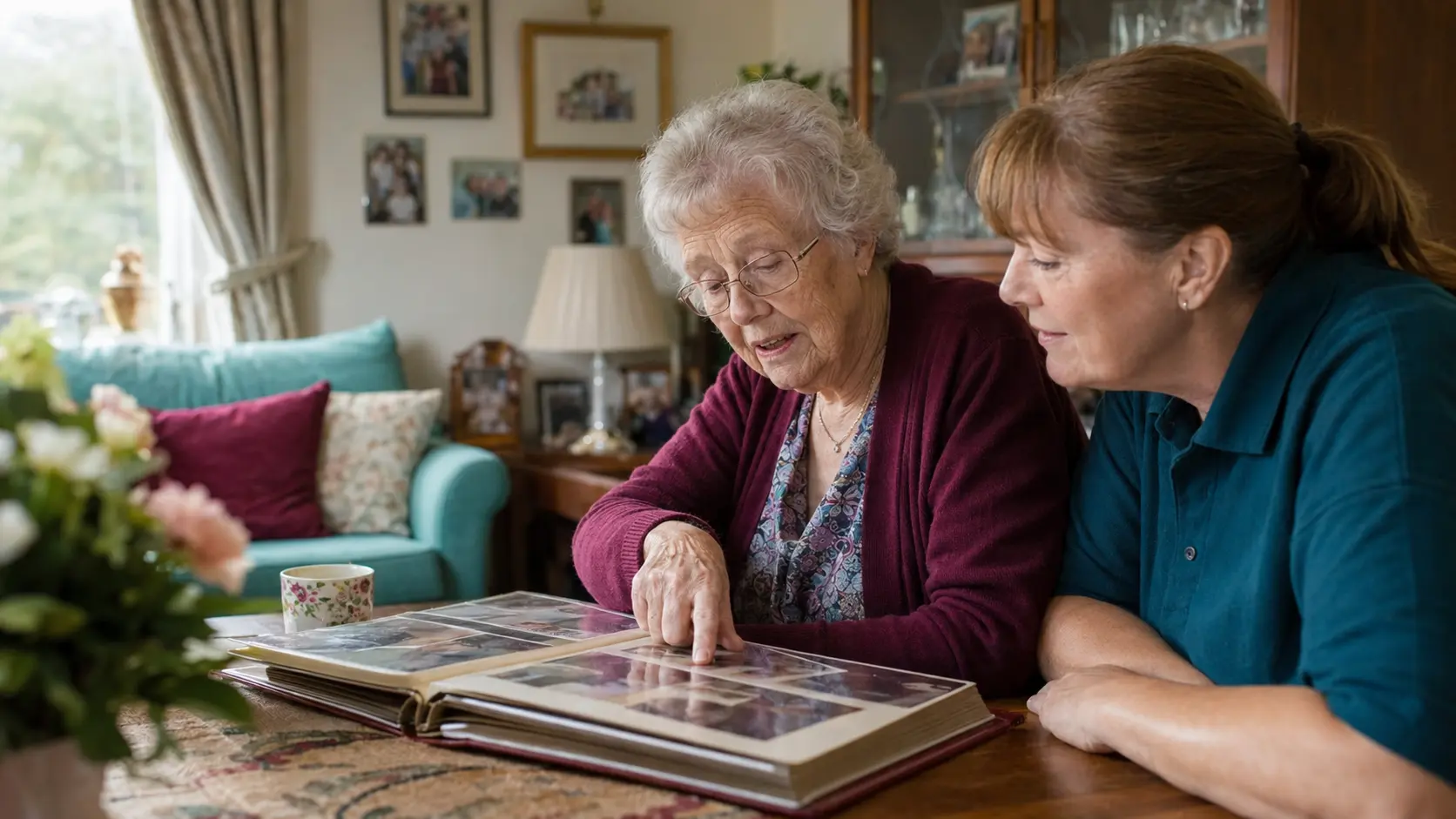
The person remains at the centre
Dementia can change memory, communication, decision-making and how someone experiences the world. It does not erase their identity, relationships, preferences or right to be involved in their care.
Our approach is calm, respectful and introduced at a pace that allows trust to develop. We focus on what the person can still do, helping them retain choice and independence rather than taking over unnecessarily.
Understanding what matters
Before care begins, we learn how the person lives, communicates and prefers to receive support. Clear guidance helps every worker provide a consistent approach.
How our team can help
The exact arrangement is shaped by assessment, consent, risk and what the individual wants from their day.
Unhurried help with washing, dressing, grooming, continence and toileting while protecting privacy.
Prompts, assistance or administration following assessment, with digital records and clear escalation.
Familiar food, preparation, prompts and monitoring where appetite, memory or coordination affect intake.
Support moving around the home, using agreed equipment and reducing avoidable falls risks.
A calm presence when someone feels confused, worried or unsettled, with attention to possible unmet needs.
Household routines, appointments, shopping, companionship and activities that still hold meaning.
Comfort in familiar surroundings
Photographs, furniture, neighbours, favourite music and established routines can all contribute to security and belonging. We work within the person’s usual environment and learn the small details that make their day feel recognisable.
This might mean breakfast at a preferred time, sitting in a favourite chair, visiting a familiar shop or keeping a long-standing evening routine.
Communication that reduces anxiety
Dementia can affect speech, understanding and processing. Calm, respectful communication can make everyday care feel safer and more manageable.
Use short explanations, one idea at a time and pauses that do not make the person feel rushed.
Offer clear options at the right time of day and use objects, photographs or gestures where helpful.
Facial expression, posture, movement and tone may communicate discomfort, fear or a need.
Acknowledge feelings, respect personal space and change pace or approach rather than arguing.
Consider pain, hunger, thirst, tiredness, noise, infection, constipation or a change in routine.
A marked change over hours or a day is recorded and reported promptly for appropriate clinical advice.

Independence and meaningful activity
Activity should reflect the person’s history, personality, abilities and current preferences. It may be quiet and familiar or connect them with other people and places.
Health, medicines and changing needs
A sudden increase in confusion or distress should not automatically be assumed to be dementia. Workers record and report changes so relatives, managers or health professionals can respond.
If someone becomes suddenly much more confused or is not acting like their usual self, seek urgent medical advice through their GP or NHS 111. Call 999 in an emergency.
Consent, choice and mental capacity
Capacity is considered for the specific decision at the time it needs to be made. We support the person to understand and express a choice, perhaps by changing the timing, language or way information is presented.
If a person lacks capacity for a particular decision, any decision made on their behalf must follow the proper process, be in their best interests and use the least restrictive option.
After hospital and alongside families
We can review changed routines, mobility, medication, nutrition and visit frequency before a safe start.
Waking-night or sleep-in care can be considered where assessed needs and suitable staffing allow.
Dependable visits can give unpaid carers time to rest, work or manage other responsibilities.
With consent or another lawful basis, relatives can receive updates and participate in reviews.
Calls can increase, reduce or change as abilities, risks and family circumstances develop.
We work with health and social care professionals and escalate concerns through agreed routes.
Why TogetherCare?
Frequently asked questions
Speak to our local team if you are unsure what level of help may be suitable.
It is agreed support from trained care workers in the person’s own home. It may include personal care, meals, medication, mobility, companionship, reassurance and help with familiar routines.
Many people can remain at home with the right combination of family, professional care, equipment and community services. Suitability depends on individual needs, risks, the home and available support.
Yes. Care may begin with one visit, several weekly calls or more frequent support and can be reviewed as circumstances change.
Yes. We also consider people living with vascular, mixed, Lewy body, frontotemporal and other dementias, subject to individual assessment.
We look for possible reasons such as pain, fear, privacy, timing or unfamiliarity, then use calm communication and meaningful choices. Care is not forced without a lawful, properly assessed basis.
Waking-night or sleep-in support can be considered depending on assessed needs and suitable staff availability.
With the person’s consent or another lawful basis and suitable information-sharing arrangements, relatives can receive agreed updates and join reviews.
St Helens is our main area. Suitable packages in Widnes, Knowsley and Wigan may also be considered.
Arrange a dementia care assessment
Tell us what has changed, what matters to the person and where support may make everyday life feel safer and more familiar.
Illustration created for TogetherCare and may not always show actual staff and service users.
Published CQC assessment 2026
“People with highly complex needs received exceptionally personalised care from staff and leaders.”CQC assessment, 2026
“I think the care overall is fantastic. I cannot fault them.”Person receiving support, feedback recorded by CQC
“Partnership working was a clear strength of the service.”CQC assessment, 2026. Professionals described TogetherCare as a “trusted provider”.