
Personal care with dignity
Gentle support with washing, dressing, continence, mouth care and changing bedding. We explain what we are doing, protect privacy and avoid rushing.
End of life care at home in St Helens
Personal, dependable care that helps someone remain in familiar surroundings with the people, routines and things that matter to them.
TogetherCare provides social care alongside GPs, district nurses, hospices and palliative care professionals. We do not replace clinical services.
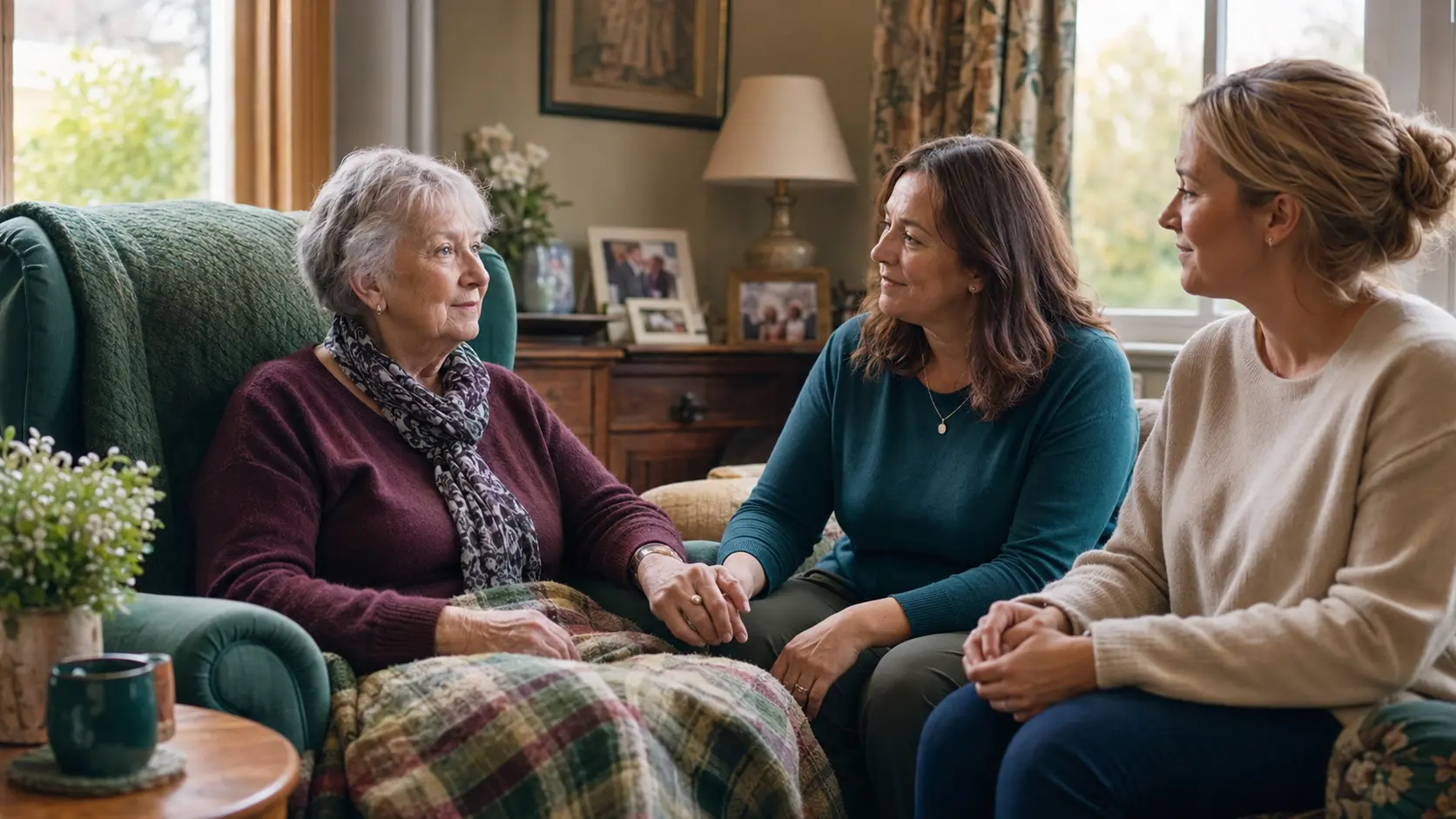
Care that begins with listening
End of life care is one of the most personal and sensitive forms of support a person and their family may need. Some people require a small amount of practical help alongside family care; others may need regular visits, extended calls, waking nights or more continuous assistance.
Our role is to understand the person’s wishes, provide dependable care and support those closest to them—without making promises that cannot be delivered safely.
Guided by the individual
Support should reflect the person’s beliefs, routines, relationships and preferences. Before care begins, we take time to understand what matters and how support should be delivered.
Where mental capacity is affected, we follow the agreed care plan and work with appropriate representatives and professionals so decisions remain lawful, respectful and in the person’s best interests.
Remaining at home
Many people wish to spend their final weeks or days at home, surrounded by familiar belongings, family, pets and routines. TogetherCare can provide practical support that helps make this possible.
Our care workers contribute through reliable attendance, observation, clear digital records and prompt escalation. GPs, district nurses and specialist palliative teams remain responsible for clinical assessment, prescribing, symptom management and medical decisions.
NHS guidance on end of life care at homeHow our team can help
Care is always delivered within the worker’s role, training and competence, following the agreed care plan and professional guidance.
Gentle support with washing, dressing, continence, mouth care and changing bedding. We explain what we are doing, protect privacy and avoid rushing.
Adjusting pillows, supporting a change of position, helping maintain a calm room and providing reassurance or quiet company.
Prompts, assistance or administration only where assessed, recorded and included in the agreed plan, with concerns escalated promptly.
Clear care notes and reporting of changes in comfort, breathing, alertness, swallowing, skin condition, intake or agitation.
Reliable attendance, calm communication and practical help that can give relatives time to rest or simply be present as family.
Communication with agreed professionals and family contacts where consent and information-sharing arrangements allow.
Medication safety
Medication arrangements can become more complex as someone approaches the end of life. We confirm what staff may safely do, how it will be recorded and who should be contacted about missed, refused or ineffective medication.
Clinical concerns
Care workers report changes such as increased pain or distress, altered breathing, reduced responsiveness, swallowing difficulty, low intake, skin changes, agitation or sudden deterioration.
Where a concern is outside our remit, staff follow the agreed escalation plan and contact the appropriate professional or emergency service.
Working together
Good end of life care depends on clear responsibilities, reliable communication and respect for the person’s choices.
Subject to consent and agreed information sharing, we can work alongside:
Relatives may want to remain closely involved while also needing practical help, night-time support or an opportunity to rest.
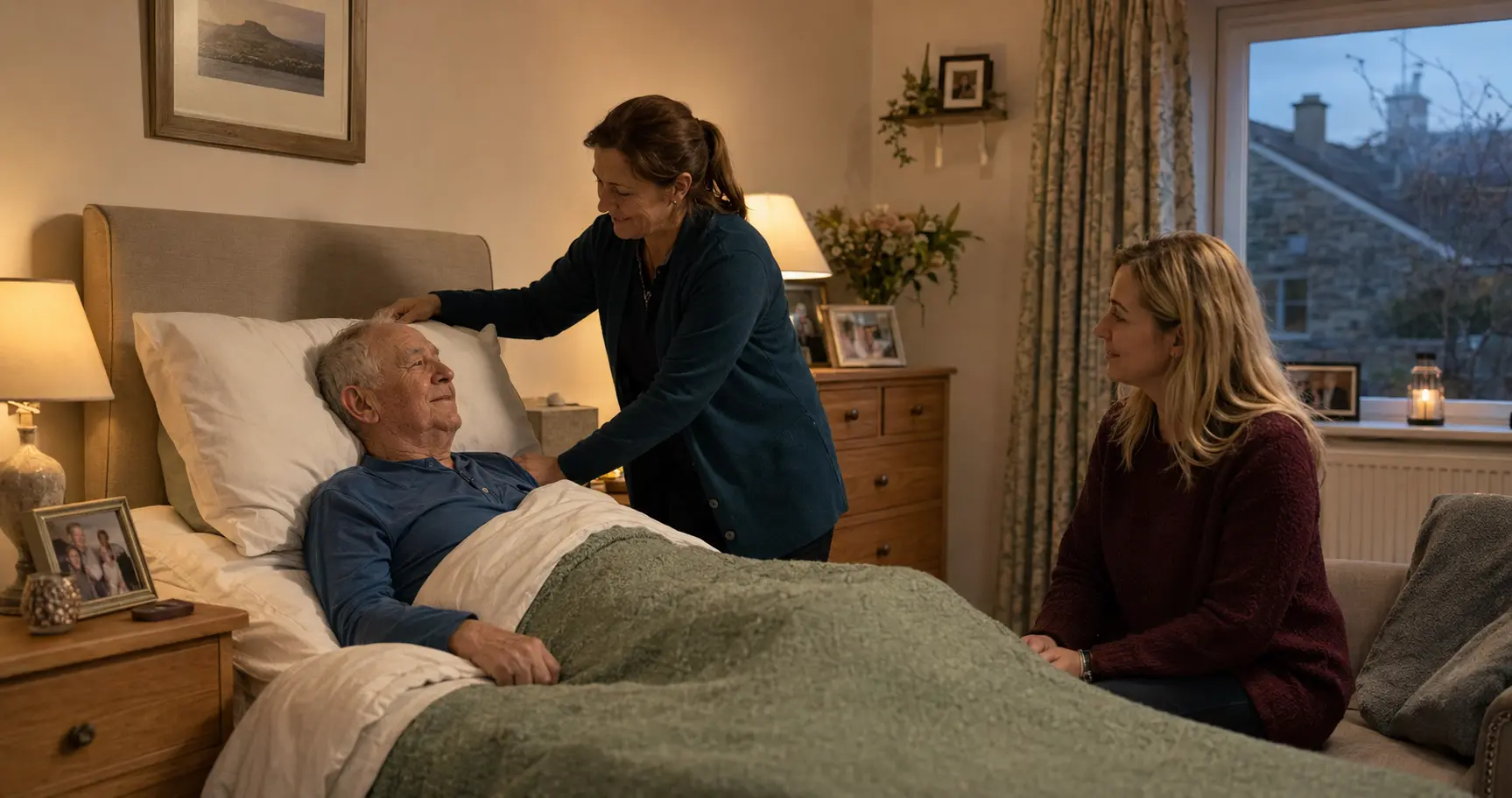
Overnight end of life care
Night-time can be particularly difficult. The person may need repositioning, continence care, medication support, reassurance or closer observation, while relatives may be exhausted after providing care during the day.
The right arrangement is agreed following assessment and reviewed if the person’s condition changes.
Urgent and fast-track support
Care may be needed with very little notice following hospital discharge or a rapid change in health. TogetherCare can consider urgent referrals and Continuing Healthcare fast-track packages in St Helens.
We respond promptly, but our priority is to mobilise safely and responsibly rather than accept a package before understanding the full requirement.
Choice, consent and planning ahead
Where an advance care plan, ReSPECT form or other relevant document exists, staff should know where it is kept and understand the parts relevant to their role.
TogetherCare does not make resuscitation or medical treatment decisions. We follow the agreed plan and seek guidance from the appropriate professional when required.
Why TogetherCare
TogetherCare is a local, family-run provider with experience supporting planned, urgent and overnight care packages. This work requires maturity, reliability and compassion.
Frequently asked questions
If your question is not covered here, call our team. We will listen, explain what falls within our role and tell you honestly what information is needed next.
It provides personal, practical and emotional support for someone approaching the end of their life. It works alongside clinical care from GPs, district nurses, palliative care teams and other health professionals.
The terms are related but not identical. Palliative care can begin earlier and focuses on comfort and quality of life for someone with a serious illness. End of life care usually refers to support during the final period of a person’s life.
We can consider urgent and fast-track referrals. The actual start time depends on safe assessment, staffing, medication arrangements, equipment and the skills required.
We can consider waking-night, sleep-in or night-sit arrangements following assessment and subject to suitable staff availability.
Medication support depends on the care plan, medicine, staff training, authorisation and competence. Responsibilities are confirmed before care starts. Care workers do not independently change medication or make medical decisions.
No. Our care workers provide social care and agreed support. District nurses and other clinicians remain responsible for clinical assessment, nursing interventions, prescribing, symptom management and medical decisions.
Yes. With the person’s consent, relatives can remain closely involved in assessments, reviews and agreed communication about care.
Yes. We can work with discharge teams and community professionals to plan a safe return home, subject to assessment and suitable arrangements being in place.
St Helens is our primary area. We can also consider suitable referrals in Widnes, Knowsley and Wigan where safe and reliable coverage is available.
Arrange end of life care at home
You may be contacting us after a hospital discharge, a Continuing Healthcare referral or a change in a relative’s condition. We will listen, review the information available and explain what TogetherCare may be able to provide.
Illustration created for TogetherCare and may not always show actual staff and service users.
Published CQC assessment 2026
“People with highly complex needs received exceptionally personalised care from staff and leaders.”CQC assessment, 2026
“I think the care overall is fantastic. I cannot fault them.”Person receiving support, feedback recorded by CQC
“Partnership working was a clear strength of the service.”CQC assessment, 2026. Professionals described TogetherCare as a “trusted provider”.