
Neurological care
Acquired brain injury, spinal injury, progressive conditions, epilepsy or complex seizure needs.
Nurse-led care in St Helens
Registered nurse input strengthens assessment, care planning, staff competency, clinical oversight and review—while home remains home.
Every referral is assessed against the person’s needs, professional guidance, staffing, insurance and TogetherCare’s regulated scope at the time the service begins.
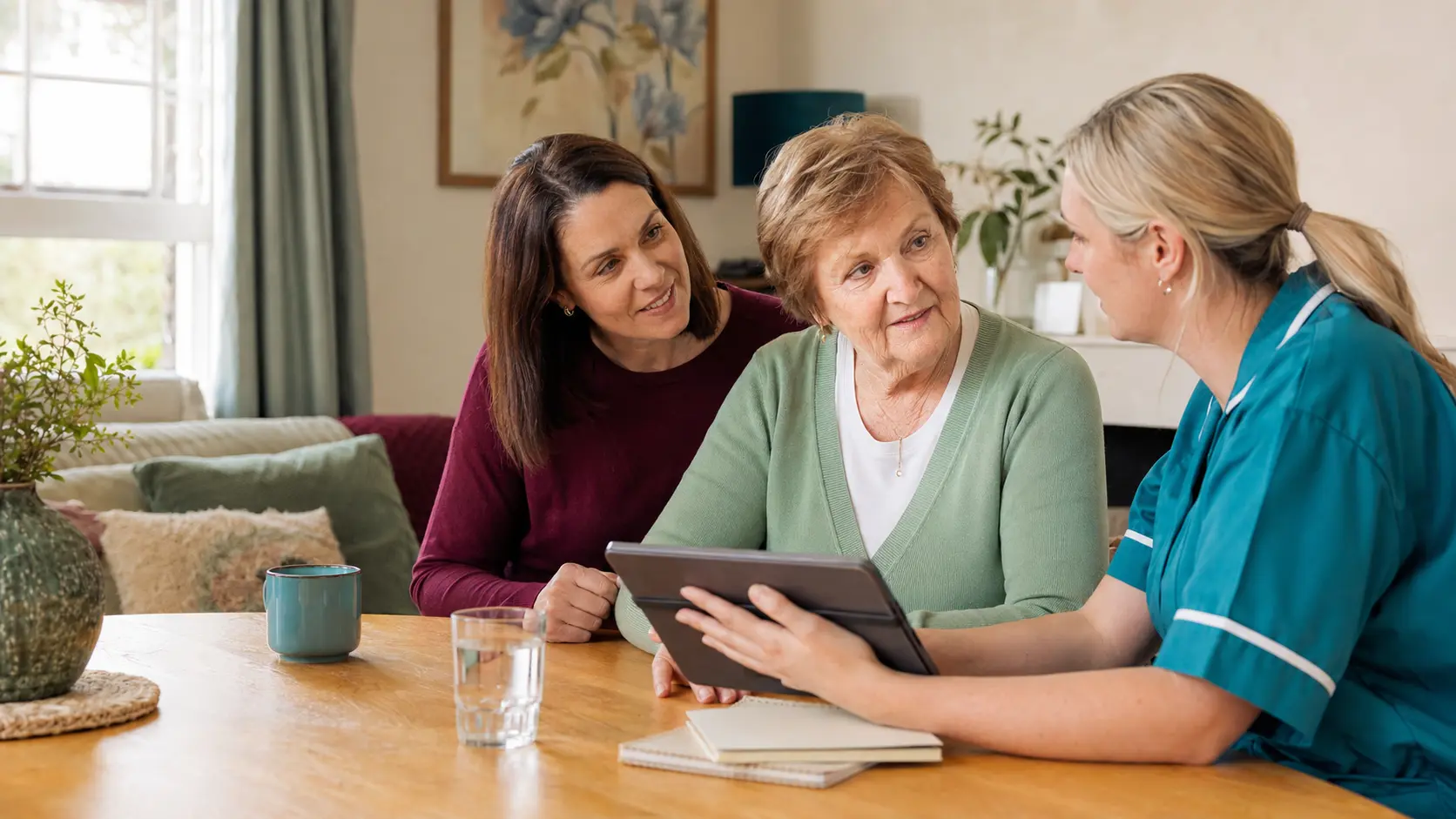
More than routine home care
Some people have complex, changing or specialist health needs that require additional assessment, staff training and structured oversight. Our nurses work alongside the individual, care workers, families and external health professionals to make responsibilities and escalation routes clear.
Nurse-led care does not mean a registered nurse attends every visit. Day-to-day support may be delivered by trained care workers, with direct nursing involvement set at the level required by the assessed package.
A detailed nursing assessment
The nurse considers what can be safely supported by trained care workers, what must remain with registered healthcare professionals and what outcomes matter to the person.
Who may benefit?
Suitability depends on actual presentation, required intervention and whether the service can be provided safely within current scope.
Acquired brain injury, spinal injury, progressive conditions, epilepsy or complex seizure needs.
Enteral feeding, enteral medicines, time-critical treatment or complex medication arrangements.
Nebulisers, oral suction, respiratory equipment or tracheostomy-related support where authorised.
Catheter, stoma and complex continence care with clear responsibilities and escalation routes.
Prevention plans, observation, repositioning guidance and liaison with specialist teams.
Complex hospital discharge, multiple conditions, unstable needs, end-of-life or palliative support.
Clinically informed care planning
Care workers need a plan they can understand and safely apply. It should describe the person’s normal presentation, exact responsibilities and what action to take when something changes.
Unexplained clinical language, verbal-only instructions or uncertain accountability are not a safe basis for complex care.
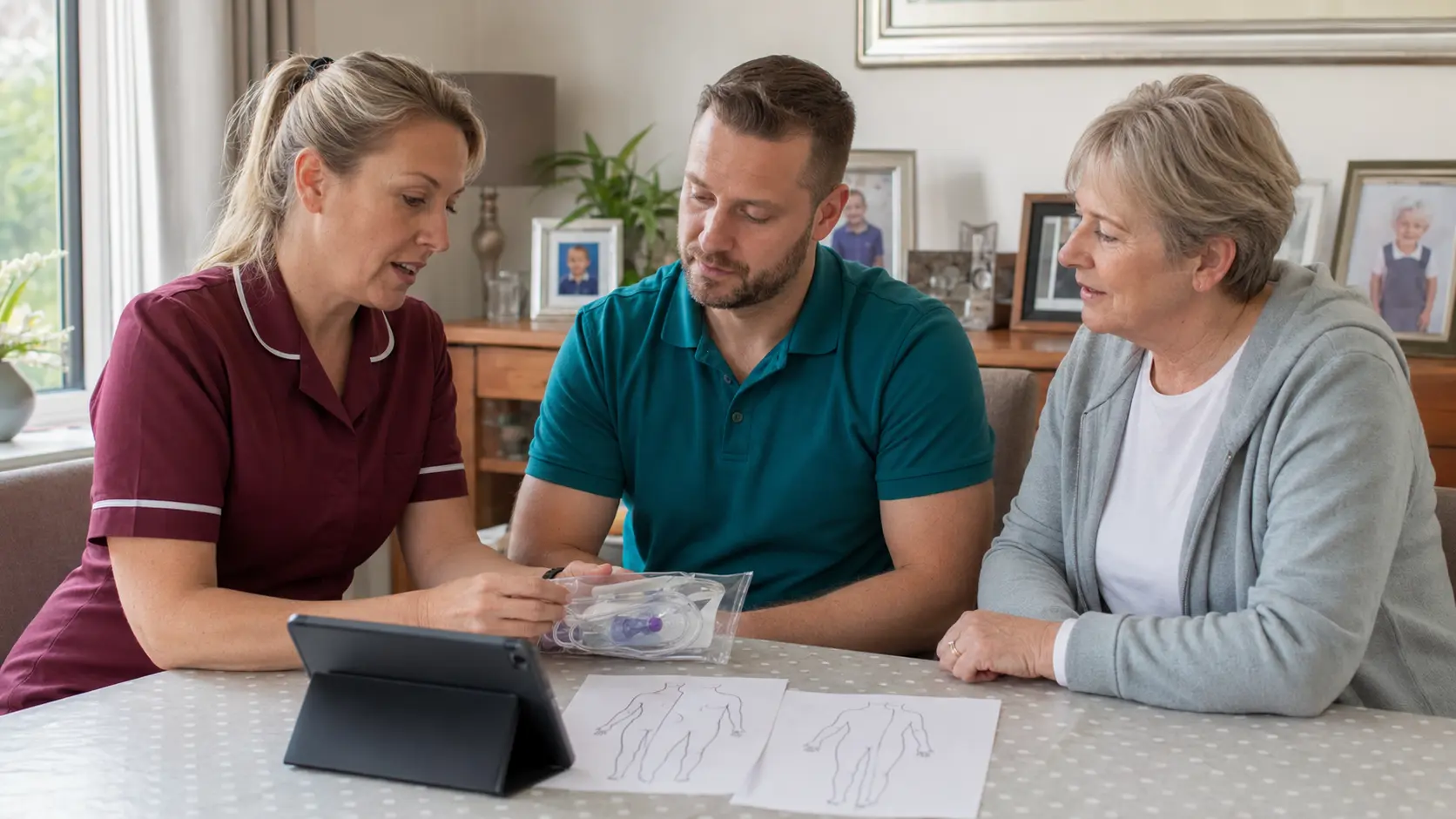
Training and competency
Specialist competence is specific to the person, task and circumstances. A worker assessed for one individual is not automatically competent for another.
Specialist support
Feeds, water and enteral medicines follow the individual plan; pain, leakage, blockage, displacement or intolerance is escalated.
The plan describes usual presentation, prescribed equipment, infection control and when breathing changes require urgent help.
Individual seizure types, immediate safety, rescue medication authority, recovery and emergency thresholds are recorded.
Hygiene, output, equipment and skin observation are supported without workers independently diagnosing infection.
Prevention, repositioning and observation plans sit alongside agreed district-nursing or tissue-viability responsibilities.
Comfort-focused care coordinates with GPs, district nurses, hospices and specialist palliative teams rather than replacing them.
Recognition of deterioration
Escalation instructions are specific enough for the worker to act, record and communicate without making an independent diagnosis.
New or severe breathing difficulty, prolonged or unusual seizures, loss of responsiveness or another immediate threat to life requires emergency action in line with the person’s plan.
Medicines, discharge and multidisciplinary working
Reconciliation, responsibilities, time-critical and as-required protocols, audits and liaison with pharmacies or prescribers.
Clinical information, equipment, supplies, medication, competencies and escalation routes are confirmed before mobilisation.
Clear responsibilities with GPs, district nurses, CHC, hospital and community specialists, therapists and case managers.
Contemporaneous care and medication records help identify patterns, missed interventions and changing needs.
With consent, relatives contribute to assessment and early-warning knowledge without replacing clinical direction.
A requested discharge date does not override the need for information, equipment, training and safe staffing.
Delegation, regulation and boundaries
Externally delegated healthcare tasks and treatment supervised by TogetherCare’s own registered professionals have different accountability and registration implications. Before accepting a task, we confirm who holds clinical responsibility, what authorisation applies and how competence is maintained.
Care workers never improvise when instructions are unclear or the person’s condition has changed. They pause, make the person safe and seek appropriate guidance.
Clinical governance that improves care
Oversight continues after the initial plan. Nurses review records, practice, competencies and incidents, then turn findings into practical action.
Why TogetherCare?
Frequently asked questions
Individuals, families, social workers, CHC teams, hospitals, case managers, solicitors and deputies can discuss a referral.
A registered nurse contributes to assessment, planning, competency, oversight or review while care is delivered in the person’s home.
Not necessarily. Trained care workers may deliver day-to-day support with the level of direct nurse involvement set by assessed needs.
Some tasks may be delivered when appropriately assessed, delegated or authorised, within current scope, and the worker has been confirmed competent.
It may include theory, demonstration, supervised practice, observation, questions and formal sign-off by an appropriate professional.
Suitable referrals can be considered following assessment, professional guidance, training, competency and scope checks.
These referrals are assessed individually against the exact intervention, current registration, clinical responsibility, staffing and competency.
Yes where accepted following assessment and supported by a clear individual protocol, authorisation and competency checks.
No. Responsibilities are agreed with district nurses and other healthcare professionals for each package.
Yes. Nursing input can review clinical information, training, equipment, medicines, responsibilities and early post-discharge review.
Overnight support may form part of the assessed package and can be delivered by appropriately trained workers with agreed oversight.
Yes. Private clients, families, case managers, solicitors and deputies can contact TogetherCare directly.
Suitable packages in Widnes, Knowsley and Wigan may be considered where staffing and clinical oversight are dependable.
Arrange a nurse-led care assessment
We will review interventions, medicines, hours, competencies, equipment, funding, outcomes and the information needed for safe mobilisation.
Illustration created for TogetherCare and may not always show actual staff and service users.
Published CQC assessment 2026
“People with highly complex needs received exceptionally personalised care from staff and leaders.”CQC assessment, 2026
“I think the care overall is fantastic. I cannot fault them.”Person receiving support, feedback recorded by CQC
“Partnership working was a clear strength of the service.”CQC assessment, 2026. Professionals described TogetherCare as a “trusted provider”.