
Personal care
Toileting, continence, washing, oral care, clothing, bedding and morning or bedtime routines with privacy.
Overnight care in St Helens
Waking-night, sleep-in and planned night-sit care shaped around actual needs—not a standard overnight model.
We assess frequency of support, mobility, health needs, known risks and the worker’s responsibilities before recommending the safest arrangement.
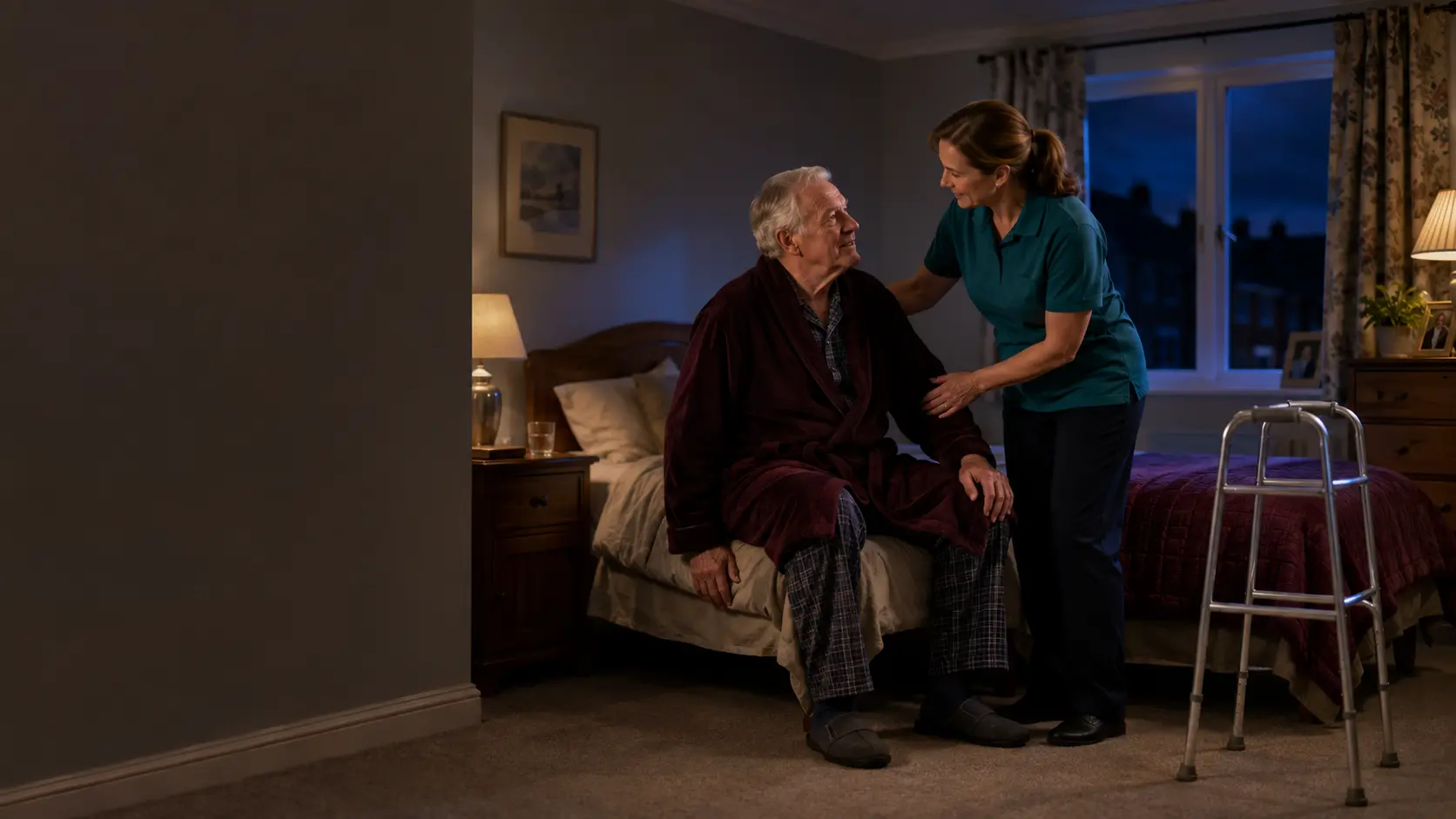
When daytime tasks become harder at night
Reduced lighting, tiredness, confusion, illness or limited mobility can make night-time feel uncertain. A trained worker can provide personal care, mobility support, medication assistance and reassurance while following an individual plan.
Overnight support may form part of a regular package or be introduced temporarily after hospital discharge, illness, injury, deterioration or family-carer breakdown.
Choosing the right night-care model
A sleep-in should never be used as a lower-cost substitute when actual needs require an awake worker. We review how often support is likely and whether intervention is predictable.
What overnight support may include
Every task must be assessed, included in the care plan and allocated to suitably trained workers.
Toileting, continence, washing, oral care, clothing, bedding and morning or bedtime routines with privacy.
Getting in or out of bed, safe transfers, prescribed aids and clear walking routes without rushing.
Following the professional schedule, positions, equipment and skin-observation guidance in the plan.
Prompts, assistance or administration following assessment, including time-critical or agreed as-required medicines.
A calm response to anxiety, confusion, disrupted sleep or distress, including checks for pain or discomfort.
Monitoring agreed concerns, recording changes and contacting on-call or health professionals when required.
Safe overnight planning
Good night care depends on more than assigning a worker. The plan must explain the person’s normal presentation, what is due, what could go wrong and how to respond.
For sleep-in support, the home must also provide suitable sleeping facilities and a safe working environment.
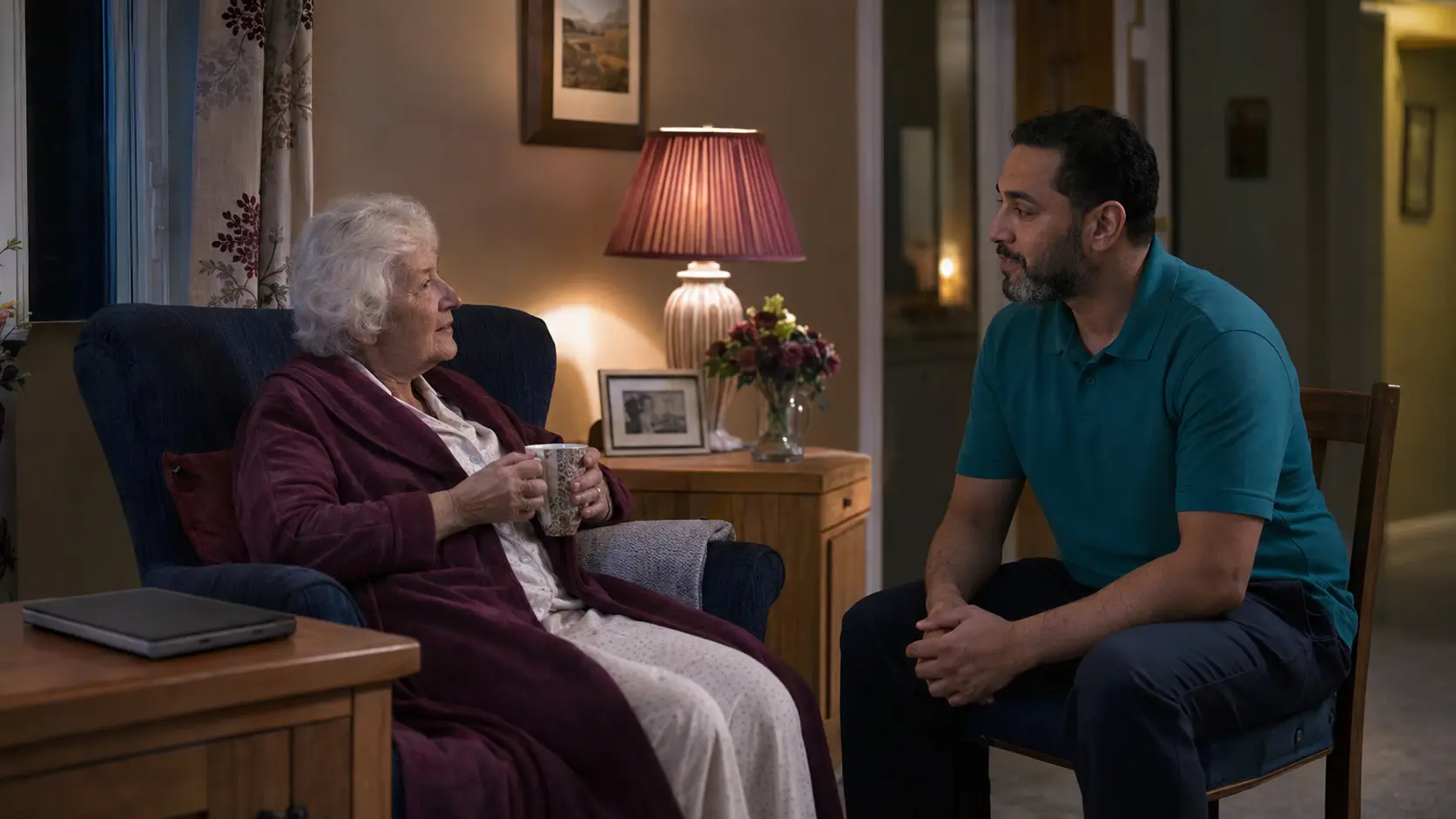
Dementia and reassurance
A person living with dementia may wake believing it is daytime, feel anxious, call for a relative or struggle to find the bathroom safely.
Specific night-time needs
Workers follow the prescribed repositioning plan and report new redness, heat, swelling, discolouration or broken skin.
Staff do not lift from the floor unless safe, trained and supported by the plan or correct equipment; suspected injury is escalated.
Temporary support can help with changed medicines, mobility, equipment and anxiety during the first nights home.
Gentle care, comfort observation and family reassurance alongside—not instead of—district nurses and palliative teams.
Specialist tasks are accepted only when within current regulated scope and workers are trained, supervised and competent.
Overnight cover can protect relatives’ sleep and make an important home-care arrangement more sustainable.
Handover, records and escalation
Digital notes are completed by the worker who delivered the care, at the correct time—not in advance. They support morning handover, review and management oversight.
Workers give factual information about what changed, when it began and what action has already been taken. They do not diagnose or delay emergency assistance.
Related TogetherCare support
Overnight support can work alongside regular home care, dementia care, complex care, end-of-life support or a temporary hospital-avoidance arrangement.
We coordinate agreed responsibilities so relatives and professionals understand what the night worker can do and when another service must be contacted.
Why TogetherCare?
Frequently asked questions
Our team will help identify whether a waking night, sleep-in or night sit fits the actual need.
A trained care worker remains in the person’s home during agreed night hours to provide planned support and reassurance.
A waking-night worker stays awake throughout. A sleep-in worker has suitable sleeping facilities and responds when occasional support is required.
A waking night is usually more suitable for regular or unpredictable support, subject to assessment.
Yes. It may be arranged following discharge or illness, during end-of-life care, or while a family carer rests.
Yes, where assessed, documented and allocated to appropriately trained staff.
Yes, where the professional plan states the schedule, technique, equipment and number of workers required.
Double-handed support can be considered where the assessed care or moving-and-handling plan requires it.
Suitable sleeping facilities and a safe environment must be available.
The service is reviewed. A sleep-in may need to become a waking night or additional professional input may be needed.
Suitable packages in Widnes, Knowsley and Wigan may also be considered where dependable staffing is available.
Arrange an overnight care assessment
Tell us the proposed hours, expected interventions, medicines, mobility, risks, clinical needs and desired start date.
Illustration created for TogetherCare and may not always show actual staff and service users.
Published CQC assessment 2026
“People with highly complex needs received exceptionally personalised care from staff and leaders.”CQC assessment, 2026
“I think the care overall is fantastic. I cannot fault them.”Person receiving support, feedback recorded by CQC
“Partnership working was a clear strength of the service.”CQC assessment, 2026. Professionals described TogetherCare as a “trusted provider”.